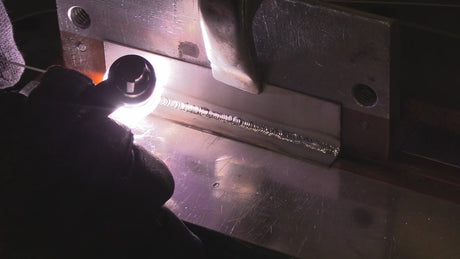
Testing some MIG Settings from a Chart
Take Advantage of these Free Welding guides

MIG Settings Charts can save you time getting you in the ball park on voltage and wire speed but you shouldn't feel locked into those numbers. They are just ball park numbers to get you started.
2 things you need to remember about most MIG settings charts:
- The settings are intended for fillet welds in flat and horizontal position
- The wire speed is often higher than it needs to be by about 10% (in my opinion).
I have done quite a bit of welding with the primeweld mts200 and have found it to be a great little mig welder. ( I especially like the way it welds on vertical uphill using a high inductance setting)
But as with a lot of mig settings charts, I found the wire speed to be a bit high once you get thicker than 11ga thickness.
You can google "mig settings chart" and find several and they can vary quite a bit.
If you are using C25 gas (75/25 argon/co2) this quick reference chart might help

Every mig welder wire feed system can vary quite a bit also so you should view even digital readouts as a number that could be off by up to 10%.
Miller's weld calculator lists wire speed for 1/4" thickness at 360-380 using .035" wire and C25 gas but also uses this disclaimer:
Just as a reference, the mig chart settings on the Miller Multimatic 220 settings chart lists 21 volts and 355 ipm for 1/4" thick welds.
I have no way of knowing how Miller arrived at those settings but I suspect once they did the testing and got some good settings dialed in, those settings might just have been copied and pasted over the years because if it aint broke, why fix it?
Check out these other posts on MIG Welding
MIG welding tips every beginner should know
Learn more about the primeweld mig180 and others here or click pic below

MIG welding tips for beginners
MIG Welding Settings Simple Chart for short circuit mig
Take advantage of our Free welding workbooks