return to how to tig weld stainless main page
Avoiding Contamination
Stainless steel can lose its stainless properties if contaminated during the welding process as well as pre and post weld cleaning.
- Make sure the stainless is clean prior to welding. That could be as simple as a wipe down with acetone, or it could involve using abrasive cleaning.
- Use only grinding wheels, wire brushes, and abrasives that are dedicated to stainless and that have not been used on carbon steel.
- Clean the stainless prior to weld to remove any shop grinding dust
- Use only stainless wire brushes that have not been used on other metals
- Files, carbon burrs, and other tools should be dedicated for stainless also
- Wipe filler metal with acetone, or other solvent
Controlling Heat Input
-
- Managing the Heat-Affected Zone (HAZ)
- Techniques to Reduce Overheating
- Pulse Welding Benefits
Controlling heat input does not always mean using less amperage.
In fact, sometimes using more amperage but a faster travel speed can help in reducing heat input.
Managing the Heat-Affected Zone (HAZ)
The heat affected zone is the area near the weld that is affected by the heat from welding.
The HAZ considerations are different for different metals but with 300 series stainless steels like 304L and 316L the main consideration is loss of stainless properties.
304 and 316 are the 2 most commonly welded stainless steels and are known as austenitic stainless steels.
304 and 316 stainless steels are both subject to something called carbide precipitation where carbon and chromium molecules combine while the stainless metal is in the 800F-1200F range.
This creates areas that are chromium depleted.
Since chromium is what helps the most with corrosion resistance, these chromium depleted areas are much less corrosion resistant.
This happens when the metal is held at too high a temperature for too long.
Its not temperature alone… but rather TIME AT TEMPERATURE
Obviously the metal needs to reach melting temperature in order to weld it but the goal should be to minimize the time the HAZ stays above 800F.
Techniques to Reduce Overheating
go back to the main "HOW TO TIG WELD PAGE"
Some ways that help minimize the time the HAZ stays above 800F are:
- Getting the puddle established quickly
- Once puddle is established, get going quickly
- Use an amperage that allows for a fairly quick travel speed
- Avoid an excessively slow travel speed
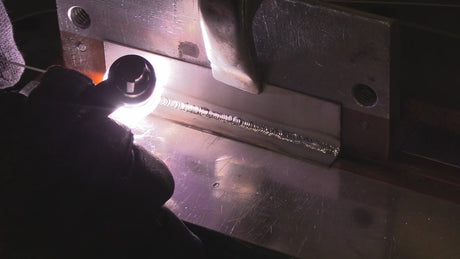
- Use heat sink chill blocks and/or backing when possible…copper works best, aluminum is almost as good for heat sinks.
- Let cool between passes for multiple pass welds
- A large diameter gas lens tig cup with CFH flow rate of 2-3 times inside diameter can help the puddle flow better and prevent excess oxidation.
EZ Kleen Stainless cleaner / passivation electro polish

Return to how to tig weld stainless main page