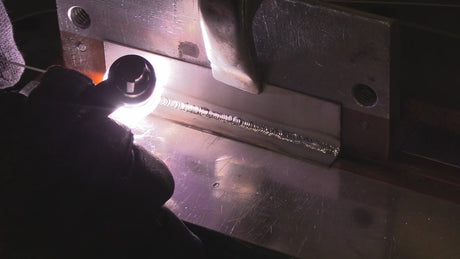
How to TIG Weld Stainless Steel

how to tig weld stainless

Jody Collier |

How to tig weld stainless steel

This page is mainly for welders who can already tig weld but want to learn more about how to tig weld stainless steel.

If you need more basic how to tig weld instructions go to the main how to tig weld page

learn more about furick cups like the fupa12 ceramic below

There are many different grades of stainless steels. According to https://atlanticstainless.com/ there are more than 60.

The 2 most commonly welded 300 series stainless steels are 304L and 316L.

While this page is focussed mainly on 304L and 316L, the best practices described here can be applied to most other stainless alloys like 301, 321, and others.

The techniques used for TIG welding stainless steel are not that much different than for carbon steels, 4130 chromoly, or other low alloys steels.

So if you can TIG weld carbon steel, you can learn to TIG weld stainless too.

One of the most important considerations when tig welding 304 or 316 stainless is maintaining the stainless properties.

Stainless steel is specified for its combination of strength resistance to corrosion. But poor practices and procedures can compromise the corrosion resistance of stainless steel. 

There are several videos in this workbook but …this first video is a good overview of best practices for how to tig weld stainless steel and is again is mainly for those who can already tig weld  but want to learn how to tig weld stainless steel.

Material Preparation

    • Cleaning Techniques
    • Preventing Cross-Contamination
    • Tools and Best Practices
    • Laser and plasma cut edges

Preparing stainless steel for TIG welding is critical to achieving clean, strong, and corrosion-resistant welds. Here’s the best step-by-step process to prepare stainless steel for TIG welding:

go back to the main "HOW TO TIG WELD PAGE"

Clean the Surface

  • Remove Oils and Grease: The first step in preparing stainless steel for tig welding is to use a solvent such as acetone, isopropyl alcohol, or a dedicated degreaser to wipe down the surface.  
  • Eliminate Dust and Dirt: Brush or wipe off visible debris with a lint-free cloth.  Sometimes shop dust can contain iron from grinding or sanding on carbon steel. Welding stainless steel with existing carbon steel dust can compromise the corrosion resistance.
  • Avoid Abrasive Cross-Contamination: If sanding or grinding is necessary, use abrasives made specifically for stainless steel. Do not use abrasives or wire brushes  previously used on carbon steel.
  • Use only dedicated Stainless Steel Wire Brushes: Ensure any wire brush is dedicated to stainless steel to avoid cross-contamination.


Ensure Clean Edges (for Joint Preparation)

  • Deburr and Smooth Edges: If you're stainless steel has been cut by plasma cutter, the dross needs to be removed using a flap disc or other abrasive, ensure edges are cleanly cut and free from burrs. Sand or file as needed.  Some laser cut edges are adequate for tig welding without further preparation but it won’t hurt anything to shine them up with dedicated flap disc designed for stainless.
  • Fit-Up Quality: Ensure tight and consistent joint fit-up for even penetration and minimized distortion.

Prevent Cross-Contamination

  • Dedicated Tools: Use only tools (grinders, files, clamps) designated for stainless steel to prevent contamination from carbon steel or other materials.
  • Clean Gloves: Wear clean gloves to avoid transferring oils or residues from your hands onto the stainless steel.

Proper Gas Shielding

    • Shielding Gas Types (Argon, Mixtures)
    • Gas Flow Rates and Gas Coverage 
    • Cup size and type selection
    • Avoiding Contamination

The most widely used shielding gas for TIG welding stainless as well as purging stainless steels is:

1. Pure Argon

  • Why It’s Popular:
    while there are a few argon mixes used for very specific stainless welding procedures, Pure Argon remains the most widely used shielding gas for TIG welding stainless steels due to its excellent arc stability, low cost, and versatility. It provides an inert atmosphere that protects the weld pool and surrounding metal from oxidation. Since argon is heavier than air, it displaces oxygen well when used for purge gas.
  • Applications:
    Used for both shielding and back purging, argon ensures clean, high-quality welds with minimal spatter.

Nitrogen is usually cheaper than argon and some contractors use it for purging stainless but Pure argon is the most commonly used and most versatile gas for purging. 

Argon Gas Flow Rates

The gas Flow rate needed for a given cup size is around 2 to 3 CFH multiplied by  cup size depending on how drafty the shop is and other factors like joint type. 

This chart uses a factor of 2.5 which is a great starting point for tig welding stainless but you may want to experiment with slightly higher flow rates due to differences from one flowmeter to the next. 

Cup size and type selection

The cup size and type that works best on stainless depends on several factors.

This video shows examples of different cup sizes being used on stainless as well as other metals.

go back to the main "HOW TO TIG WELD PAGE"

Avoiding Contamination

Stainless steel can lose its stainless properties if contaminated during the welding process as well as pre and post weld cleaning.

  • Make sure the stainless is clean prior to welding.  That could be as simple as a wipe down with acetone, or it could involve using abrasive cleaning.
  • Use only grinding wheels, wire brushes, and abrasives that are dedicated to stainless and that have not been used on carbon steel.
  • Clean the stainless prior to weld to remove any shop grinding dust 
  •  Use only stainless wire brushes that have not been used on other metals
  • Files, carbon burrs, and other tools should be dedicated for stainless also
  • Wipe filler metal with acetone, or other solvent 

Controlling  Heat Input

    • Managing the Heat-Affected Zone (HAZ)
    • Techniques to Reduce Overheating
    • Pulse Welding Benefits

Controlling heat input does not always mean using less amperage.

In fact, sometimes using more amperage but a faster travel speed can help in reducing heat input.

Managing the Heat-Affected Zone (HAZ)

The heat affected zone  is the area near the weld that is affected by the heat from welding.

The HAZ considerations are different for different metals but with 300 series stainless steels like 304L and 316L the main consideration is loss of stainless properties.

304 and 316 are the 2 most commonly welded stainless steels and are known as austenitic stainless steels.

304 and 316 stainless steels are both subject to something called carbide precipitation where carbon and chromium molecules combine while the stainless metal is in the 800F-1200F range.

This creates areas that are chromium depleted.

Since chromium is what helps the most with corrosion resistance,  these chromium depleted areas are much less corrosion resistant.

This happens when the metal is held at too high a temperature for too long.

Its not temperature alone… but rather TIME AT TEMPERATURE


Obviously the metal needs to reach melting temperature in order to weld it but the goal should be to minimize the time the HAZ stays above 800F.

Techniques to Reduce Overheating


go back to the main "HOW TO TIG WELD PAGE"

Some ways that help minimize the time the HAZ stays above 800F are:


    • Getting the puddle established quickly
    • Once puddle is established, get going quickly 
    • Use an amperage that allows for a fairly quick travel speed 
    • Avoid an excessively slow travel speed
    • Use heat sink chill blocks and/or backing when possible…copper works best, aluminum is almost as good for heat sinks.
    • Let cool between passes for multiple pass welds
    • A large diameter gas lens tig cup with CFH flow rate of 2-3 times inside diameter can help the puddle flow better and prevent excess oxidation.


 Tungsten Electrode Selection for stainless

    • Tungsten Electrode Types
    • Electrode Grinding and Preparation
    • Matching Electrode diameter to Amperage


What is the best tungsten electrode for TIG welding stainless steel?

There are several types of tungsten that work fine for tig welding stainless steel.

One of the main things you want is for the tip to stay sharp a long time.

here are the top 4 types of tungsten that work best for tig welding stainless steel:


  1. 2% thoriated is still the best performing tungsten for stainless but there are concerns that it is somewhat radioactive.  Opinions differ on whether 2% thoriated tungsten is safe but it is still widely used for tig welding stainless steels and stays sharp a long time.
  2. Ceriated tungsten is not a bad choice and stays sharp quite a while and is OK for aluminum at low to medium amperage.  If you tig weld mostly on DC with only an occasional aluminum job, then ceriated is a good choice.
  3. LaYZr and E3 both work well for stainless and as all purpose tungsten for stainless , aluminum as well as all other metals.  ( to me they perform the same).  They both have excellent low amp starts and restarts are good.
  4. 2% lanthanated is a great all purpose choice for keeping things simple and works great for stainless, aluminum, as well as all other metals.

There are many other types of tungsten that will work ok like trimix, multi mix, 1.5 lanthanated and a few others but the ones listed above are the best choices for stainless.

Electrode Grinding and Preparation of tungsten for tig welding stainless

The first thing to remember in cutting and sharpening tungsten electrodes is to cut the tungsten the right way to avoid splitting.

go back to the main "HOW TO TIG WELD PAGE"

Different types of tungsten differ in how they splinter when you break them so its best to not snap them at all with pliers, wire dykes, or fingers.

When you snap tungsten without scoring it with a grinder, you risk splitting.

Sometimes it's obvious.

Other times it's not so obvious.

When it's not so obvious, you might go ahead and sharpen it without knowing the tungsten is split...and that can even disguise the split.

A tungsten electrode that is split can result in poor and inconsistent arc starts and an arc that wanders.

Once you cut a tungsten the right way and without splitting it, there are right and wrong ways to sharpen a tungsten electrode.

Sharpening a tungsten on a bench grinder or angle grinder with a hard rock works ok but is not the best method.

Especially if you grind it using a rough grit  with the grinding marks running sideways.

Don't get me wrong, I've done it a thousand times using scratch start tig on pipe and even on X rayed welds. But that was with scratch start at anywhere from 65 to 150 amps.

For high frequency start at low amp starts, there are much better ways to sharpen tungsten.. 

  • A hard rock on an angle grinder works ok for a lot of  applications but for precision low amp arc starts and for thinner metals, you can easily have a wandering and unstable arc that will melt things you don't want to melt.

(Think about starting an arc right next to a thin cooling fin.)

You point the tungsten where you want the arc start but it stutters and jumps over to the cooling fin and might just make a mess before you can get off the foot pedal.

The best way to sharpen tungsten is with a dedicated tungsten grinder with a smooth diamond wheel and with precision angle settings.

But What if you don't have a tungsten grinder?

  • First off, you want to use a rather fine grinding wheel with around 120 grit or finer. ( most aluminum oxide wheels on bench grinders are  typically 36 to 60 grit)
  • Secondly, you want make sure that your grinding scratches are running lengthwise and not sideways. Its fine to get the taper almost done with grinding marks running sideways as long as you finish it off with grinding marks running lengthwise.
  • third, Holding the tungsten electrode with a drill motor at low rpm helps get a consistent grind.
  • Other methods for sharpening tungsten can also be used like a belt sander or even a drill doctor…the main thing is to get a consistent taper with fine scratches running lengthwise

Matching Electrode diameter to Amperage

Each tungsten electrode diameter has a minimum and maximum range of amperage that works best.

Exceeding the maximum amperage is typically much worse than using too low an amperage for a given electrode diameter.

For tig welding stainless steels, a 3/32” diameter tungsten will do a good job from 1amp  to around 250 amps.

3/32” diameter in either 2% thoriated, E3, LaYZr, Ceriated, or 2% lanthanated will all work well for tig welding stainless.

1/8” diameter can also provide good results on stainless provided you prepare the taper a bit sharper for lower amp applications.

Choosing the Right Filler Rod


While there are certain tig welding jobs that can be welded without filler metal, most call for using filler metal.

Filler metal selection is important and fortunately when it comes to tig welding stainless, here is a good stainless steel filler metal selection chart to guide you.

https://www.washingtonalloy.com/wp-content/uploads/2020/12/stainless-selector-guide.pdf

 It is usually a good idea to use a filler metal that most closely matches the base metal.

For example, 316L should be welded using 316L filler rod.

But with stainless steels, there are a few exceptions. 

For example,  er308L filler metal is recommended for tig welding 304 stainless because 304 filler metal is not even readily available.

303 free machining grade can be welded for certain applications but does not have a matching filler metal and is best welded using er308L, er309, or er312 Stainless TIG Rod.

321 is often welded with 347 filler rod due to availability and a few other engineering concerns.

When is it acceptable to tig weld stainless steel without filler metal?

go back to the main "HOW TO TIG WELD PAGE"

There are a few applications where filler metal is not required.

One example of that is sanitary stainless tubing.

The main reason for not using filler metal on sanitary stainless tubing is that many joints are around .063” wall thickness and can easily be welded without filler metal and still be strong enough for the  application.

For sanitary stainless tubing, adding filler metal can increase the possibility of some contamination on the inside of the root pass. 

Another example is certain food processing equipment where a smooth weld that won’t trap bacteria is paramount over plain weld strength.


Chapter 6 Welding Technique

    • Out running the heat
    • Maintaining Arc Length and Shielding
    • Travel speed
    • Back Purging

Out running the heat


go back to the main "HOW TO TIG WELD PAGE"

Stainless steel has low thermal conductivity.  That means that heat can build up quickly.

You could say that stainless is the opposite of aluminum when it comes to thermal conductivity.

That is why aluminum requires more amperage than carbon steel while stainless steel requires less.

So if you take a long time to get your puddle established on stainless, heat can build up so much that it can be difficult to out run.

One way to avoid excess build up of heat is the 3 second rule….get the puddle established and moving within 3 seconds,,,2 seconds is even better.

With a foot pedal amperage control this might even include using more amperage for the first 2 seconds and then backing off amperage once things get moving.

One great thing about tig welding stainless steel is that restarts are relatively easy.  So if things get too hot, simply stop and let cool for a while. You can even speed cool 300 series stainless using compressed air or even distilled water.

After cooling simply restart using the 3 second rule.

Maintaining Arc Length and Shielding


An arc length that is equal to or less than the diameter of the tungsten used will give good results and help to pinpoint the arc and control the puddle.


A lot of problems can be cured by a tight arc

go back to the main "HOW TO TIG WELD PAGE"

Gas Shielding 

Stainless steel loves argon. 

Even a slight loss of shielding can oxidize the puddle and make it sluggish.  

For most simple fillet welds a large diameter gas lens or special cup like a jazzy 10 or furick 12 can make a huge difference.

go back to the main "HOW TO TIG WELD PAGE"

Travel speed

Travel speed is one of the biggest factors when it comes to heat input.

A slow travel speed at low amperage can have more heat input than a faster travel speed using higher amperage.

But There is limit to how fast a person can weld and still be in control.

That said, attempting to increase travel speed can be a big help in both avoiding distortion and maintaining stainless properties.


Back Purging


On full penetration welds the penetration side should also be shielded with argon.


Certain applications like filling mis drilled or worn out holes in stainless sheet metal allow for copper or aluminum backing but argon shielding is usually superior to backing.

When molten stainless is exposed to the atmosphere a condition known as granulation aka sugaring occurs.  This is not the same thing as carbide precipitation but its not good because it weakens the weld and also provides crevices for bacteria to grow.

The best way to prevent sugaring on the inside of a pipe or tubing weld is with an argon purge.

A Dual Flowmeter is a convenient way to get purge gas without needing an additional cylinder of argon.


  • Heat builds up in stainless steel due to low heat conductivity and once heat builds up, it is hard to outrun.
  • 3 Second rule...get the puddle established and moving within 3 seconds…2 seconds is even better
  • Travel speed is one of the biggest factors when it comes to overall heat input...a slow travel speed with low amps can often overheat stainless more than a higher amperage with faster travel speed.
  • Heat sinks in the way of fixturing or chill bars can help a lot to remove heat from stainless and prevent heat from building up.
  • A gas lens setup helps.  TIG cups like the Jazzy10 make a big difference and help prevent discoloration
  • keep the hot tip of the filler rod shielded in the argon and snip the end between restarts if the tip gets discolored.
  • purge the back side with argon on full penetration welds...when not possible, often copper or aluminum backing can help trap argon from the torch and provides adequate results.
  • Use only stainless steel wire brushes that have only been used on stainless (a good practice is to label and keep your stainless brushes stored separately from carbon brushes.)


Post-Weld Cleaning and Finishing

    • Removing Heat Tint and Discoloration
    • Passivation, Electropolishing, and Corrosion Resistance

Removing Heat Tint and Discoloration

LEARN MORE ABOUT EASY KLEEN STAINLESS CLEANER

The heat tint you see on a stainless steel tig weld is an oxide film that reflects light and produces different colors depending on the oxide layers.

When the right heat input, technique, and the right tig cups are used, the weld can be full of shiny colors.

Sometimes a stainless weld will be dull gray.  That usually is an indication that heat input and gas shielding are wrong.  

While a dull gray weld is not a desired condition, it can still be acceptable depending on acceptance criteria of the applicable codes, customer requirements, etc.

Dull gray is definitely not what we are aiming for.

We like to see the pretty colors because they are a pretty good indicator that best practices were used.

But while  colors look pretty and make for a great photo, leaving them as is does not provide the best corrosion resistance and the heat tint colors should be removed.

For certain applications, removing the heat tint using a stainless wire brush will suffice.

Other applications might even require polishing using abrasives and polishing wheels.

But for the utmost corrosion resistance, electropolishing and or passivation is sometimes needed.

Passivation, Electropolishing, and Corrosion Resistance

During the welding process, the layer of chromium oxide on the surface of the weld and haz can be compromised.

Free iron in the form of shop dust or contaminated wire brushes or abrasives can also be present.

Wire brushing is not adequate for restoring corrosion resistance

Passivation using chemicals or electropolishing remove free iron and improve corrosion resistance.

Passivation and electropolishing are not the same process.

Passivation uses chemical solutions or a paste.

Electropolishing uses a chemical solution along with electric current.

Simple metallurgy of 300 series stainless steel

Return to the main "HOW TO TIG WELD PAGE"