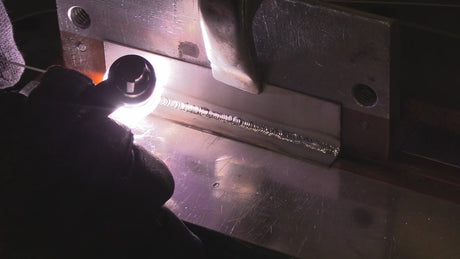
Back to Basics: TIG Welding Aluminum
Aluminum TIG welding has a reputation for being difficult.
In reality, it’s not that difficult —it’s just unforgiving.
Aluminum seems to exaggerate your bad habits.
Arc length, torch angle, metal preparation, tungsten prep, gas flow rates, cup selection all make more difference than TIG welding carbon steel.
Aluminum will happily expose every weakness in your fundamentals. That’s why beginners struggle with it, and it’s also why aluminum is such a good teacher.
If you get the basics right, aluminum TIG welding becomes very predictable and actually fun to weld.
Why Aluminum Is Different
Before touching machine settings, you need to understand what makes aluminum behave the way it does.
Aluminum conducts heat extremely fast. When you first start a weld, it feels like nothing is happening. Then suddenly the puddle appears, and on thin aluminum…if you’re not ready for it, the puddle collapses.
On top of that, aluminum has an oxide layer on the surface that melts at a much higher temperature than the base metal underneath it. If you don’t deal with that oxide layer, your weld will be dirty and you just won’t get the best results.
Bottom line: aluminum rewards good fundamentals and punishes sloppy habits.
Why We Use AC to TIG Weld Aluminum
Aluminum is typically TIG welded using alternating current (AC) for one main reason: oxide removal.
The oxide layer on aluminum melts at roughly three times the temperature of the base metal. (3600F vs 900F)
AC allows the arc to alternate between cleaning the oxide and penetrating the base metal.
- The electrode positive (EP) portion of the AC cycle provides the cleaning action.

- The electrode negative (EN) portion provides penetration and heat into the work.

Modern machines let you adjust AC balance and AC frequency.


Rules of thumb:
- Too much cleaning action overheats the tungsten and widens the arc.
- Just enough cleaning produces a shiny puddle without destroying the tungsten.
- Higher AC frequency tightens the arc and gives better control, especially on thinner aluminum.
If you’re chasing settings, stop. Good cleaning and torch control matter far more than perfect numbers.
Cleaning Aluminum Properly (Non-Negotiable)
Dirty aluminum welds poorly. Period.
Before welding dirty aluminum:
- Degrease with acetone or alcohol to remove oils.
- Use a dedicated stainless steel wire brush.
- Brush lightly to remove surface oxide.
- Keep that brush for aluminum only.
- Each situation calls for different abrasives, carbide burrs, wire wheels etc.
Contaminated Grinding wheels, flap discs, or shared brushes can contaminate aluminum and introduce problems you’ll chase for hours.
Rule of thumb:
Use abrasives designed for aluminum and use low rpms to avoid smearing oxides
Tungsten Selection and Preparation
Modern inverter machines have changed the game when it comes to tungsten selection for aluminum.
You no longer need pure tungsten.
If someone tells you that you need pure tungsten for aluminum, just say ok and ignore that suggestion.
Pure tungsten is no longer the best choice for most Aluminum TIG welding.
2% lanthanated or multi-mix tungstens like E3 or CK LaYZr work extremely well on AC and carry a lot more amperage than pure tungsten
Choose tungsten size based on the amperage range you will need.
2% lanthanated or multi-mix tungstens like E3 or CK LaYZr
Safe amperage ranges

When welding aluminum on AC:
- You want a small rounded tip, not a giant ball.
- A large ball causes arc wander.
- Clean, properly prepped tungsten produces a stable arc and puddle.
Rules of thumb:
- Bigger tungsten for thick aluminum, smaller diameter tungsten for thin aluminum. (It depends a lot on what machine you are using as some machines allow for a stable arc at low amps even with a large diameter tungsten)
- Small rounded tip beats a big ball
- Dirty tungsten = unstable arc
- Split tungsten = unstable arc
Shielding Gas and Cup Setup

Aluminum needs good gas coverage.
Use 100% argon. Keep it simple.
Cup size and gas delivery matter more on aluminum than on steel because aluminum oxidizes very quickly when exposed to air.
A gas lens helps smooth out flow and allows more stickout without losing coverage. A larger cup makes aluminum welding more forgiving.
Too much gas flow can cause turbulence and pull air into the weld zone, so more is not always better.
Rules of thumb:
- 4-8 for aluminum
- Gas lens = longer electrode extension with better gas coverage
- Too much gas flow causes erratic arc
- Too little gas flow affects both shielding and cleaning action
Amperage and Heat Control
A common starting point for aluminum is about one amp per thousandth of material thickness, but that only holds true up to around 125 thousandths and its just a rule of thumb to be used to get you in the ball park.
Aluminum often requires more initial amperage to get the puddle established because it pulls heat away so fast. Once the puddle forms, heat builds quickly and you need to back off the amperage.
This is where the foot pedal matters…or a torch amp control.
The pedal is not an on-off switch. It’s a heat management tool.
Rules of thumb:
- Watch the puddle—read it
- The puddle melts the rod, not the arc
- Feed rod into the puddle, not the arc
Arc Length and Torch Angle
A long arc is the most common mistake beginners make.
A long arc makes it difficult to feed filler wire without it melting and balling up before it even reaches the puddle.
Arc length should be the same as electrode diameter or sightly less.
Keep the arc short and consistent. Maintain a slight push angle and keep the torch steady.
Rule of thumb:
Short arc equals stable puddle. Long arc equals frustration.
Filler Rod Selection and Feeding Technique
Most aluminum TIG welding is done with either 4043 or 5356 filler rod.

- 4043 flows smoother and is more forgiving.
- 5356 is stronger but stiffer and less fluid.
- Sometimes 5356 looks better and is less grainy
Choose rod diameter that feeds easily. Smaller rod gives better control, especially for beginners.
Rules of thumb:
- Keep the hot tip in the argon when possible
- Using tig rod that is too small usually results in the rod melting before it reaches the puddle
- Using tig rod that is too large chills the puddle too much.
- Feed rod smoothly…don’t stab it
Bead Practice and Aluminum Drills

Before jumping into joints, practice padding beads on plate.
Padding beads teach you:
- How to feed the rod
- How fast heat builds up
- How to control the puddle
- How consistent motion affects bead shape
Focus on puddle control and consistency
TIPS FOR FEEDING TIG ROD

Practice advice:
- Don’t rush to joints
- Learn to read the puddle
- Make small adjustments of aluminum settings like AC balance and Frequency and notice results. Take notes.
- Practice with intention Iteration vs Reps
Common Aluminum TIG Problems (and Fixes)
- Black soot: poor gas coverage or contaminated tungsten or metal
- Gray, dull welds: long arc, poor gas shielding, insufficient cleaning
- Cracking: not enough filler rod, wrong aluminum, or poor joint prep
- Tungsten melting: tig torch plugged in to wrong port, too much ac balance cleaning action, tungsten diameter too small for amperage
- Arc wandering: contaminated or split tungsten or excessive balling
- Eractic noisy arc: too much argon flow rate
Fix fundamentals first before touching machine settings.
Aluminum TIG Rules of Thumb (Quick Review)
- 3 C’s. 1. Clean 2. Clean 3. Clean but brand new aluminum usually only needs a simple wipe down.
- One amp per One thou rule will get you close (but only up to .125”) but set machine amps a bit hotter and use foot pedal to control
- Keep a short arc equal or slightly less than your tungsten diameter
- 3/32” 2% lanthanated is good up to around 200 amps on AC and might be all you need
- Use a 4-8 cup with 2-3 CFH per cup size (test on scrap)
- Read the puddle
- Dont add filler until you have a puddle
Final Reality Check
Aluminum TIG welding is not about magic waveforms or expensive machines.
It’s about:
- Clean metal
- Stable arc
- Good gas coverage
- Heat control
- Practice
Get those right, and aluminum becomes predictable instead of frustrating.
And once you can weld aluminum well, everything else gets easier.