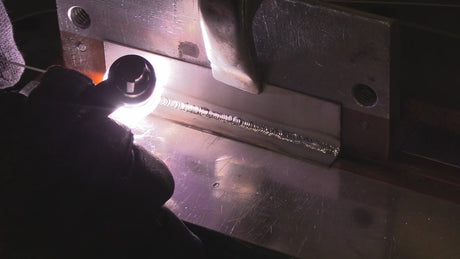
Do I Need Pulse on a TIG Welder?
Learn more about this PrimeWeld TIG325x with pulse


How to TIG weld Stainless Steel
One of the questions that comes up all the time when people are shopping for a TIG welder is:
“Do I need pulse?”
If you’ve looked at modern TIG machines, you’ve probably noticed that pulse is one of the features manufacturers like to highlight.
It sounds advanced, and it can make a machine seem more capable.
But here is the truth as I see it.
Pulse can be a very useful tool, but it’s not something you absolutely need.
Pulse is touted as a way to limit distortion and heat input but those benefits rely mostly on the skill of the weldor to properly utilize pulse ...more than pulse settings alone.
Let’s break down what pulse actually does and when it can help.
First — What Pulse TIG Actually Is
Pulse TIG simply means the amperage cycles between two levels:
- Peak amperage (the hotter part of the cycle)
- Background amperage (the cooler part)
This happens at a specific frequency, measured in Pulses per Second (PPS)
Instead of holding a constant amperage, the machine rapidly alternates between hot and cool.
That cycling can help a bit with things like heat control, puddle rhythm, and arc focus.
But here’s an important point that often gets overlooked.
Most Welds That Use Pulse Can Also Be Done Without It
This is probably the biggest misconception about pulse.
Just because a weld was done using pulse doesn’t mean it requires pulse.
In fact, most TIG welding — even on thin material — can be done perfectly well using steady amperage and good torch control.
A lot of experienced TIG welders rarely use pulse at all.
If you understand:
- arc length
- heat control
- filler timing
- travel speed
you can weld just about anything without pulse.
So if the TIG machine you’re considering doesn’t have pulse, don’t assume that automatically limits what you can do with it.
Pulse is a tool. Not a requirement.
And besides, there is always the option of pulsing with the foot pedal which does not require pulse settings on the machine.
Pulse Can Help a Beginner Develop Filler Timing
Where pulse can be very helpful is with beginners.
One of the hardest things to learn in TIG welding is timing when to add filler rod.
With pulse turned on, the arc naturally creates a rhythm.
Each pulse becomes a cue.
Many beginners find it easier to establish a pattern like:
pulse → add filler → pulse → add filler
That rhythm can help develop consistent dab timing.
Over time, most welders eventually learn to control that rhythm themselves without relying on pulse.
But early on, pulse can act like a metronome. (a device used by musicians for timing or beat)
Pulse Can Help Smooth Out an Ugly Bead
Another practical use of pulse is bead appearance.
There are times when you have to fill in a gap with low amperage to avoid blowing holes and that can make for an ugly bead.
Using 1-2 pulses per second along with just enough amperage to smooth things out can turn an ugly bead into a pretty one.
Think about grinding out a crack in ..050” aluminum with a zip wheel. It is difficult to weld it win one pass and get penetration while making the bead look good. But by welding it up cold without key holing. And then going back over the weld using pulse settings, you can achieve penetration as well as a good appearance
You still need:
- steady torch control
- consistent arc length
- proper heat input
But pulse can sometimes help tidy up bead appearance while you’re developing those skills.
High-Speed Pulse Can help focus the Arc
One of the more advanced uses of pulse happens at higher pulse frequencies.
When pulse is set to high speeds…like 50-100pps, the arc can become slightly more focused or “constricted.”
That tighter arc can help when welding:
- near an edge
- on thin corners
- on small parts
- close to heat-sensitive areas
A narrower arc gives you better control over where the heat goes.
This can be especially helpful when welding on tool and die repairs, aircraft engine air seals, or any precision build up weld.
Pulse Can Help When TIG Brazing with Silicon Bronze
Pulse can also be helpful when TIG brazing with silicon bronze.
TIG brazing typically runs at lower heat than fusion welding, and controlling puddle temperature becomes very important.
1 to 2 pps along with lay wire technique usually works well for tig brazing
Pulse can help by:
- reducing average heat input
- controlling puddle size
- preventing overheating and oxidizing the pulddle
When brazing thin sheet metal or automotive panels, pulse can make it easier to keep the puddle controlled without melting the base metal.
Again, it’s not mandatory — but it can be a helpful tool.
So… Do You really Need Pulse?
For most TIG welding jobs, the answer is no.
You can weld aluminum, stainless, and carbon steel perfectly well without pulse.
But pulse can be useful for:
- helping beginners develop filler timing
- smoothing out bead appearance
- tightening the arc using high pulse rate settings
- controlling heat during TIG brazing
Think of pulse the same way you’d think about cruise control in a vehicle.
You don’t need it to drive.
But sometimes it makes things easier.
Final Thoughts
If you’re shopping for a TIG welder and it includes pulse, that’s a nice feature to have.
These days, pulse is almost a standard feature on modern tig inverters so you won’t save much by buying a tig welder without pulse capabilities.
So don’t let the presence or absence of pulse be the deciding factor when choosing a machine.
Arc stability, AC capability (for aluminum), overall reliability, and customer support matter far more.
At the end of the day, good TIG welding still comes down to the fundamentals:
- Metal prep
- short arc length
- steady torch control
- consistent filler timing
- good heat control