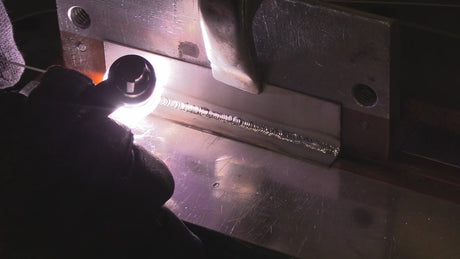
Dual voltage TIG welder for small shop
See the Complete FAQ page for the Primeweld TIG225x
If you’re setting up a welding space in your garage or small shop, one feature that deserves serious attention is dual voltage capability.
A dual voltage TIG welder can run on 115 volts or 230 volts, which gives you a lot more flexibility than a single-voltage machine.
For a home shop welder — especially someone who plans to take on occasional repair jobs or start a small side hustle — that flexibility can make a big difference.
Let’s look at why a dual voltage TIG welder is often the smartest choice for a home shop setup.

See the Complete FAQ page for the Primeweld TIG225x
What Dual Voltage Actually Means
A dual voltage TIG welder can run on two different power sources:
- 115 volts (standard household outlet)
- 230 volts (typical shop power)
When plugged into 230V, with the recommended breaker, the machine can deliver its full output.
But when you plug into a 115V outlet, the machine automatically reduces its maximum output to stay within the limits of that circuit. (20 amp recommended)
Even with the reduced output, a surprising amount of useful welding can still be done on 115V.
And that’s where the versatility comes in.
Dual Voltage Means Portability
One of the biggest advantages of a dual voltage machine is portability.
A lot of small repair jobs happen somewhere other than your shop:
- a friend’s garage
- a customer’s small business
- a restaurant kitchen
- a farm or ranch
- a mechanical shop
You might not always have access to a 230V outlet.
But almost every building has 115V power available somewhere.
With a dual voltage TIG welder, you can grab your machine, a small tool bag, and get to work without worrying too much about what kind of power is available.
For someone doing occasional side jobs, that portability opens a lot of doors.
Stick Welding on 115 Volts for Remote Repairs
Another feature that makes dual voltage TIG machines useful is that most of them also have stick welding capability.
And for field repairs or remote jobs, stick welding is often the quickest and most practical option.
Even when running on 115 volts, many dual voltage machines can run electrodes like:
- 3/32" 6011
- 3/32" 7018
Those rods can handle a surprising range of repairs.
Typical examples include:
- small brackets
- farm equipment repairs
- lawn equipment
- gate hinges
- trailer parts
- cracked steel components
For a lot of real-world repair work, a 3/32" stick rod on 115V power is more than enough.
That means you can show up at a job site, plug into a normal outlet, and still get the repair done.
TIG Welding Stainless Steel on 115 Volts
Dual voltage machines are also useful for TIG welding stainless steel repairs — even when plugged into 115V.
You obviously won’t have the same maximum output you would on 230V, but many stainless repairs don’t require a lot of amperage.
Common examples include:
- dry cleaning equipment
- restaurant equipment
- food service counters
- stainless tables
- light gauge tubing
- sanitary stainless
These jobs often involve thin stainless material, which means they can be welded comfortably within the output range available on 115V. (Usually around 120-140 amps DC)
If you’re doing small stainless repairs for local businesses, a portable TIG setup can be very handy.
TIG Welding Sanitary Stainless
Another place dual voltage TIG welders shine is in sanitary stainless.
Restaurants, breweries, and food service facilities often need small stainless repairs that require TIG welding.
Examples might include:
- stainless tubing
- sanitary valves and fittings
- food service equipment
- kitchen fixtures
- stainless brackets or mounts
When working on thin stainless, the amperage requirements are relatively low.
That means many of these jobs can still be handled effectively on 115V power, especially when the material thickness is often only .063” thick.
And when you’re back in your shop and plugged into 230V, the same machine can handle heavier work as well.
The Home Shop Advantage
For a home shop welder, dual voltage gives you the best of both worlds.
When you’re in your shop with 230V power, you can run the machine at full output for things like:
- aluminum TIG welding
- heavier steel work
- larger stainless projects
- Small production runs
But when portability matters, you still have the option to plug into 115V power and get useful work done.
That flexibility is one of the reasons dual voltage machines have become so popular.
If you’re setting up a home shop or thinking about taking on small repair jobs, a dual voltage AC/DC TIG welder is one of the most practical tools you can buy.
It allows you to:
- weld aluminum, stainless, and carbon steel in your shop on 230V
- take the machine to remote jobs and plug into 115V power
- run 3/32" stick electrodes like 6011 or 7018 for quick repairs using 115 volt power
- handle stainless equipment repairs for restaurants and small businesses
That kind of versatility is exactly what makes a dual voltage TIG welder such a good fit for a small shop or home shop.
And if you’re planning to turn your welding skills into a small side hustle, having a machine that can adapt to different power situations can make the difference between turning down a job — or getting it done.