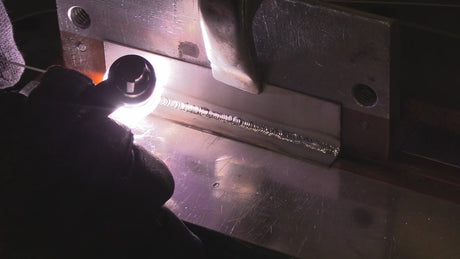
Shielding Gas Basics – Best Shielding with the Best cups
In TIG welding, you’re weld is only as good as your gas coverage.

Click here on on the pic below for more info

100% Pure argon is the standard shielding gas for TIG welding carbon steel, but simply turning on the gas without thinking won’t always get you the best results.
Flow rate, cup size, gas lens usage, and torch position all affect gas shielding.
In this article, we’ll break down the fundamentals of shielding gas for carbon steel TIG welding, how to avoid contamination, and how to dial in your setup for clean, smooth welds every time.
🧪 Why is shielding gas important?
The purpose of shielding gas is to protect the molten weld puddle and tungsten electrode from the atmosphere — especially oxygen, nitrogen, and hydrogen. Without proper shielding, you’ll get:
- Porosity
- Tungsten oxidation and erosion
- Dirty, dull, or crusty welds
- Poor arc stability and arc wandering
For TIG welding carbon steel, 100% argon is the go-to gas. It provides a stable, inert arc environment and supports a focused, controllable weld puddle.
🧯 Recommended flow rates for pure argon
|
Cup Size |
Flow Rate (CFH) |
Notes |
|
#5–#6 |
10–18 CFH |
Good for small low amperage welds and tight angle joints |
|
#7–#8 |
14–24 CFH |
for all around general work |
|
#10+ (Jazzy, Fupa, etc.) |
20–30 CFH |
For great coverage on carbon and 4130, as well as stainless |
⚠️ Higher flow rates are not always better — too much flow causes turbulence, which pulls air into the arc and causes contamination.
Cups and gas lens setups can vary so experiment and take notes on the best flow rates for your cups
🔧 How to maximize gas coverage
1️⃣ Use a gas lens
Gas lenses straighten and smooth the flow of argon.
Benefits:
- Improved gas shielding
- Ability to extend tungsten farther out for better visibility as well as jobs that require it
- Better results on corners, tight joints, and tubing
If you're not already using a gas lens on your TIG torch, it's one of the simplest upgrades for better looking and more consistent welds.
2️⃣ Keep a short arc and correct torch angle
A tight arc is key (equal or slightly less than tungsten diameter used)
Keep your torch angle no more than 20° off vertical ( torch angle is very forgiving with a tight arc)
3️⃣ Use pre-flow and post-flow settings correctly
- Pre-flow (0.5–1 sec): Starts gas flow before arc ignition — protects tungsten from oxidizing and helps with crisp arc starts
- post-flow (5–10 sec): Shields tungsten and cooling weld after arc stops.
4️⃣ Check for leaks and contamination
- Use soapy water to test for leaks at fittings and connections
- Make sure your torch hose as well as inert gas hose is clean and not dry rotting or breaking down
5️⃣ Weld in the right environment
Shielding gas is easily disturbed by:
- Fans and wind
- Drafty shops or open doors
- Welding too close to a fume extractor
- Some tig machines have a very strong fan and blow out the front… so make sure to point the machine away from arc area
If you're working outside or in a breezy environment, use a windscreen or shield box to protect your weld zone.
💡 Signs of bad shielding gas coverage
- Gray or sooty welds
- Black tungsten tip after only a few welds
- Welds that hiss, pop, or crackle while welding
- Porosity in the weld bead
- Arc wandering or instability
✅ Checklist for perfect gas coverage
✔️ Use pure 100% argon
✔️ Set flow rate based on cup size... 2 to 3 CFH per cup size almost always works
✔️ Use a gas lens (do yourself a favor and get a good quality tig cup kit)
✔️ Maintain a tight arc length
✔️ Use 0.5 seconds pre-flow and 5- 10 seconds article-flow
✔️ Protect the weld area from wind and drafts
Learn more about our Navigator TIG cup kits here

Pure argon is the foundation of clean, controlled TIG welding on carbon steel — but it only works if your flow, torch setup, and work environment are dialed in. By using a gas lens, setting proper flow rates, and protecting your arc, you’ll avoid common contamination issues and lay down smoother, stronger welds. If your welds look dirty or your tungsten keeps turning black, don’t blame your skill — check your gas.