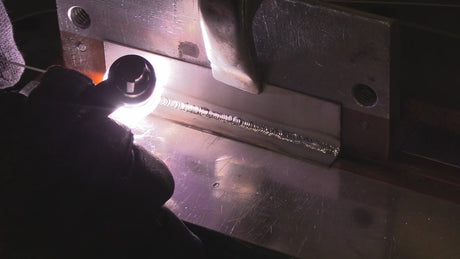
Fillet Weld Tips
T-Joints, Lap joints, and Corner Joint Tips for Smooth Fillet Welds on Carbon Steel

Corner, Lap, and Tee Joint comparing ER70S2 & ER70S6
FILLER METAL IN STOCK HERE AT WELDMONGER.COM
Go to Main Index page for TIG Welding Carbon steel Basics
T-joints and Lap joints are two of the most common weld joints in fabrication
Undercut, uneven leg size, and lumpy fillets are common issues, especially for beginners.
The good news?
With a few small adjustments to your setup and technique, you can lay down smooth, strong fillet welds that look clean and hold up under inspection. In this article, we’ll cover simple, beginner-friendly tips to help you master TIG fillet welds on carbon steel T-joints.
🔧 What is a T-joint in welding?
A T-joint is where two pieces of metal intersect at a 90° angle — typically with one piece “tee’d” into the face of another. It's used in structural, frame, and tab work. The goal in welding a T-joint is to fuse both the vertical and horizontal members evenly, with a smooth, concave or flat fillet.
⚠️ Common problems when TIG welding T-joints:
- Undercut on the vertical leg is often caused by uneven torch angle but can also be caused by too long an arc length, excess amperage, and insufficient filler rod.
- Uneven leg sizes — where one leg of the fillet weld is noticeably smaller. Often caused by torch angle favoring one member of the tee joint.
- Cold restarts causing a noticeable lump - restarts often need slightly more amperage to make them blend it. practicing restarts with intention pays big dividends
- Lack of fusion in the root of the joint is common in fillet welds and is often caused by a combination of long arc and inadequate amperage.
- Overheating the joint and warping thin tabs or plates can easily happen with too long an arc and too slow a travel speed
- Melt thru and suck back on thin sheet metal is often a result of too much amperage, too slow travel speed, too little filler metal, or a combination these things. It takes some practice reading the puddle to know when you are melting thru on a thin tee joint.
✅ Tips to master fillet welds on carbon steel T-joints
1️⃣ Torch Angle: Point Between the Edges
Hold the torch at about a 45° angle to the joint so the arc is evenly directed between the two pieces and lean the torch back around 10-20°
Tip: A gas lens allows for a longer electrode extension and makes it easier to see the tip of the tungsten and puddle.
2️⃣ Use a Tight Arc Length
Keep the tungsten as close to the puddle as possible without touching.
- A long arc spreads heat too wide, making it harder to get fusion into the corner.
- Tight arc = focused arc = better bead profile and less undercut.
- Torch angle can be very forgiving provided arc length is tight enough
3 Control Your Filler Timing
- Dip the filler right at the front edge of the puddle, where fusion is happening.
- Don’t stab the filler wire deep into the puddle but rather add it accurately — keep the hot tip of the filler rod in the gas shield and feed smoothly.
- Use 1/16" or 3/32" ER70S-2 for most light-to-medium carbon steel work. 1/16” works well up to around 1/8” thickness and 3/32” works well up to around 1/4” thick
5️⃣ Start Hot, Then Back Off
- To make smooth starts and restarts, You may need a little more amperage to start the puddle in the corner of a tee joint, especially on thicker metal.
- Once the puddle is established, back off a bit with your foot pedal or amperage control to prevent overheating and keep the bead tight.
6️⃣ Avoid Undercut by Watching the Edge
- As you move the puddle, watch both toes of the weld — ensure they’re wetting into the base metal.
- If you use the step forward and pause technique, add enough filler on the pulse to fill any undercut.
- Avoid undercut by controlling the puddle and staying centered in the joint.
T-joints can be challenging. And the thinner the metal, the more challenging they are.
But with the right torch angle, tight arc length, and consistent filler feeding, you can lay down fillet welds that are both strong and smooth. Like most things in TIG, mastering T-joints comes down to repetition — and dialing in one small habit at a time.