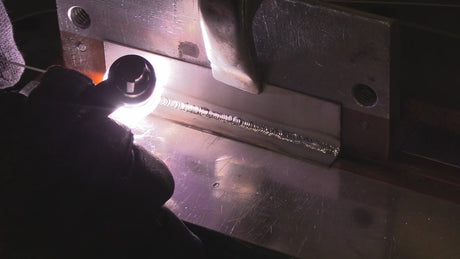
Introduction to TIG welding Carbon Steel
I want to give you a "no BS" jump start and to help you get some quick Wins so you can see progress quickly without all the fluff you might get in a textbook.
Lets get to it.
Setting up your TIG Welding machine
Here are the bare bones "TIG back to basics" for carbon steel:
- TIG welding machine (preferably with high frequency start)
- Polarity set to Direct Current Electrode Negative (DCEN)
- 7 or 8 gas lens cup 14-24 CFH of pure argon (2 to 3 CFH per cup size)
- 3/32" 2% lanthanated tungsten sharpened
- 1/16" ER70S-2 or ER70S-6 filler rod
- 11ga up to 1/4" cold rolled steel practice metal
Simple TIG settings for How to TIG weld carbon steel
Before welding, Clean your metal
click on any image to learn more about tig cups and tig kits


More on how to tig weld carbon steel
How Clean Is Clean Enough?
Going Back to Basics: The Importance of Surface Prep in TIG Welding Carbon Steel
When it comes to TIG welding carbon steel, one of the easiest ways to set yourself up for success is to start with clean metal. It sounds simple — and it is — but it’s also one of the most overlooked steps.
Why does surface prep matter?
TIG welding relies on a clean, stable arc and precise control of the molten puddle. Carbon steel straight from the mill or your local metal supplier is rarely ready to weld without a bit of work. (Cold rolled steel can be tig welded without cleaning but even cold rolled welds better when cleaned with abrasives)
Going Back to Basics: The Importance of Surface Prep in TIG Welding Carbon Steel
When it comes to TIG welding carbon steel, one of the easiest ways to set yourself up for success is to start with clean metal. It sounds simple — and it is — but it’s also one of the most overlooked steps.
Why does surface prep matter?
TIG welding relies on a clean, stable arc and precise control of the molten puddle. Carbon steel straight from the mill or your local metal supplier is rarely ready to weld without a bit of work. (Cold rolled steel can be tig welded without cleaning but even cold rolled welds better when cleaned with abrasives)
✅ Mill scale, rust, and oil act like barriers. They prevent the arc from stabilizing properly and can mix contamination into your weld — leading to porosity, inclusions, and weak areas.
✅ Dirty metal disrupts shielding gas coverage. Even if your gas flow is perfect, dirt on the surface can cause turbulence that lets atmosphere in, leading to oxidation and dirty welds.
✅ Good prep equals good penetration. A clean joint allows the arc energy to go where it’s supposed to — into fusing the base metal — rather than trying to burn through junk on the surface.
Common contaminants on carbon steel
Here’s what to watch for before you strike an arc:
- Mill scale: The hard, dark gray coating that forms during hot rolling. It’s tough and needs to come off.
- Rust: Any orange or red corrosion needs to be cleaned away.
- Oil/grease: From handling, storage, or cutting fluids — all should be removed.
- Paint/markings: Even marker ink or layout dye can cause problems near your weld bead.
How to prep carbon steel for TIG welding
1️⃣ Degrease first
Before you hit it with a grinder or wire brush, wipe down your material with acetone or a dedicated metal cleaner. This removes oil and grease without smearing it around.
2️⃣ Remove mill scale and rust
The best tools for this job:
- Flap disc on an angle grinder
- Wire wheel (for light rust or tight corners)
- Sanding block or emery cloth (for small parts or touch-ups)
You don’t need to remove deep pitting unless it’s right where you’ll weld — but get down to bright, clean steel.
3️⃣ Check your edges and joints
Make sure the areas where the weld will start, run, and end are clean. Pay special attention to inside corners, bevels, and gaps.
4️⃣ Final wipe-down
After grinding or sanding, give the joint area a final wipe with a clean rag and acetone to remove any dust or residue.
Pro tip:
👉 Don’t clean your carbon steel too far ahead of time. Clean steel can flash rust in humid conditions. Try to prep just before you weld.
Tungsten 101 – Choosing and sharpening Your Tungsten for TIG welding carbon steel
→ What type, diameter, and grind are best for carbon steel?


Back to Basics: Choosing and Preparing Tungsten for TIG Welding Carbon Steel
TIG welding offers tight control and clean results — but only if your tungsten is selected and prepped correctly.
Your choice of tungsten, how you grind it, and how you maintain it can make a big difference .
In this chapter, we’re going to strip it down to the essentials: how to choose the right tungsten for carbon steel, how to prep it properly, and what mistakes to avoid.
✅ Which tungsten is best for carbon steel?
For TIG welding mild or carbon steel, you want a tungsten that holds a sharp point, starts easily, carries a lot of amperage for a given diameter, and runs a stable arc. Here are the top choices:
1️⃣ 2% Thoriated (Red Band)
- Type: EWTh-2
- Why it works: Excellent arc starts, good performance on DC.
- Downside: Slightly radioactive — some authorities say this is not a major risk in normal use, but always grind with proper ventilation and precautions. Can be used on both DC and AC but Does not perform very well as an all purpose tungsten for both steels and aluminum
2️⃣ 2% Ceriated (Gray Band)
- Type: EWCe-2
- Why it works: Smooth arc starts, especially at low amperage.
- Good choice for thin carbon steel or or stainless and good for beginners practicing on thinner coupons.
3️⃣ 2% Lanthanated (Blue Band)
- Type: EWLa-2
- Why it works: Versatile, good for both AC and DC. High amp carrying capability.
- Pro tip: Lanthanated tungsten can be a great “universal” option if you also TIG aluminum and want to stock one type.
⚙️ How to grind tungsten for carbon steel
For carbon steel, you're welding on DC electrode negative (DCEN) sometimes referred to as DC straight polarity — and that means you want a sharpened point, not a ball or rounded tip.
GIVE 2% LANTHANATED A TRY - WELDMONGER 3 PACKS
🔧 Steps to prep your tungsten:
- Use a dedicated tungsten grinder or wheel
- Best practice is not to use the same wheel you grind carbon steel with (the risk of problems from this is pretty low in my opinion)
- Grind lengthwise (not across the tip)
- Grinding in the direction of the electrode length helps the arc stay focused and straight.
- Grinding sideways followed by a light finish grind lengthwise is also fine.
- Taper the tip to about 2.5× the diameter or around 30 deg
- Example: For 3/32" tungsten, aim for a 1/4" long taper.
- The point should be sharp but not needle-thin.
- Optional: Flat the tip slightly
- A small flat spot (like the thickness of a dime) at the end can help reduce tip erosion when using higher amps but this does not seem to work well when using lower amperage on thin metal
🧼 Keep it clean
- Wipe off the tungsten with acetone before welding if it’s been sitting exposed.
- If you dip the tungsten in the puddle, stop and regrind — don’t keep welding with a contaminated tip.
- Store sharpened electrodes in a clean tube or case to avoid dirt or dust.
Carbon Steel Tungsten and Amperage.
This is just a rough guide to get you in the ball park
|
Material Thickness |
Tungsten Size |
Amperage Range |
|
1/16" (1.6mm) or less |
1/16" |
60-70 amps |
|
1/8" (3.2mm) plate |
3/32" |
100–140 amps |
|
1/4" (6.4mm) plate |
1/8" |
160-200 amps |
👆 Use this chart only as a general guide—
- A 3/32” 2% Lanthanated tungsten can handle anything from razor blades to 200 amps.
- It is not always necessary to switch to smaller tungsten when making a few welds on thinner metal… there is a lot of overlap where a 3/32” or even a 1/8” electrode can work fine even on thinner metal using low amperage….if sharpened correctly
Easy TIG Rod Selection – Choosing the Right Rod
Filler metal in stock at weldmonger store